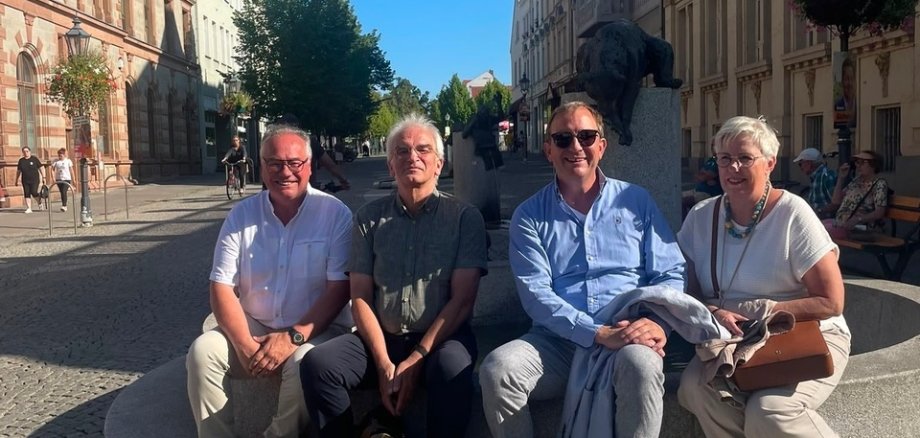
Bernburg. Around 300 kilometres lie between Bernburg an der Saale and Worpswede, the artists’ village in the moorland north of Bremen. Art links the two places. A delegation from Worpswede, accompanied by the mayor of the municipality, recently visited the Salzlandkreis. They also visited the Neo Rauch Print Foundation.
Worpswede has been a household name for over 130 years. In 1889, a group of young artists left the town to paint out in the countryside. From this idea grew a world-famous artists’ village with museums, studios and galleries, where painters and sculptors still allow visitors to look over their shoulders to this day.
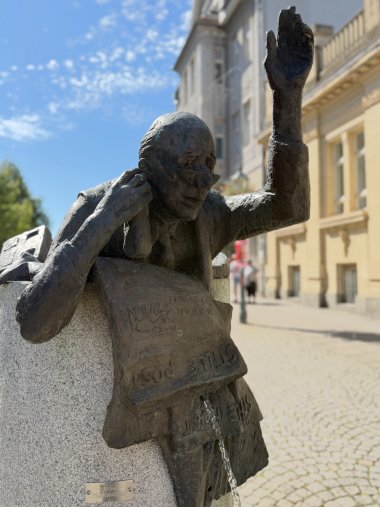
The link to this spot lies right in the heart of Bernburg’s pedestrian zone – even though many people are probably unaware of it. ‘Stille Post’ on Poststraße depicts the old children’s game: six bronze figures by a water channel, created in 1998. It was created by the sculptor Bernd Altenstein, who was a professor at the University of the Arts in Bremen for decades. He has had his studio in Worpswede since 1994. So every day, passers-by in Bernburg walk past this work of art, which has its origins in the North German artists’ village.
“For us, art doesn’t just belong in museums; it’s at the heart of everyday life,” says District Administrator Markus Bauer. “People come across it, for example, in Bernburg’s town centre, where there’s a link to a place like Worpswede.” Art as part of everyday life also shapes the Salzlandkreis in other places. In Aschersleben, the Neo Rauch Graphic Arts Foundation is dedicated to one of the best-known contemporary painters. Born in Leipzig in 1960, he grew up in Aschersleben. Neo Rauch’s paintings now hang in museums from Europe to New York – his graphic works are on permanent display in his home town of Aschersleben.
For the District Administrator, this is more than just a question of individual artistic identity: “Art and culture create identity and a sense of belonging. They attract visitors to the region and fill hotels, cafés and guesthouses.” Anyone discussing the future of a region must not overlook the fact that a location also thrives on soft factors such as art and culture. “Art makes the Salzlandkreis a place where people enjoy living, working and visiting,” says Markus Bauer. The visit from Worpswede shows that there is more in common between the Saale and the Bremer Moor than the distance between them might suggest.