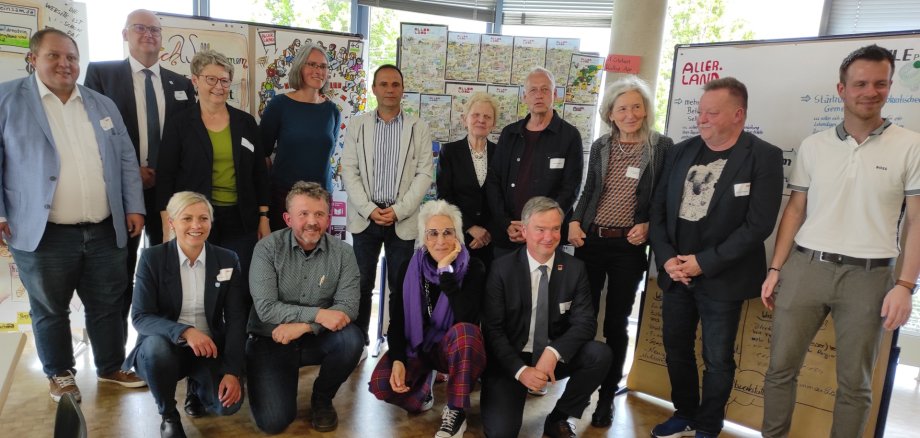
Aschersleben. It is now Region 68 that she is visiting here, says Hortensia Völckers, former artistic director of the Federal Cultural Foundation, as she begins the final jury discussion with the hosts in the cafeteria of the district office. She is in charge of the four juries involved in the Aller.Land funding project throughout Germany. On Thursday afternoon last week, the group arrived in Aschersleben with the jury members for the eastern region, accompanied by the project coordinator from the Aller.Land programme office and representatives of the Saxony-Anhalt Ministry of Economics, Tourism, Agriculture and Forestry. Earlier that day, they had been in Wittenberg. There are four projects in total in Saxony-Anhalt. The jury chair, an expert in cultural matters with experience and an overview, described what they had just seen and experienced in the two hours in Aschersleben as an "overwhelming strategy". She said she was "delighted, confused and impressed" by the presentation of the associations, the cultural diversity and the ideas of "Wir4Gemeinsam".
"The local project participants did everything they could in the best sense of the word. A new network is being established, a joint concept has been created with responsibilities and a financial plan. So much commitment to culture in rural areas, which we are proud to be and which we shape with our possibilities, must be recognised and should be rewarded," says District Administrator Markus Bauer. "Culture is also education, a glue that holds our society together, that needs and must reach people across structural and district boundaries and can support democracy. It should not count as a voluntary task for local authorities, but should be able to be financed in a countable way."
Even though the district administrator was meeting with his counterparts abroad at the same time and was therefore unable to be there in person, the Salzland district is supporting the project of the cooperating four towns and municipalities from three districts and had taken over the application process. The common hope is therefore that, after starting in 2024 with many innovative approaches and initiatives in the development phase to build a multi-layered network and a viable concept for a participation-orientated cultural project, "Wir 4Gemeinsam" will also be taken into the implementation phase from mid-2025 following the jury's visit and assessment.
The directly neighbouring towns of Aschersleben, Seeland, Falkenstein/Harz and Arnstein from three districts of "Wir4Gemeinsam" also hope and strongly desire this. Their mayors - Lord Mayor Steffen Amme, Robert Käsebier, Rico Röse and Janet Klaus - welcomed the jury with their trump cards and arguments as to where and how the prospective funding of 1.5 million euros over the next five years could be used to achieve the programme's goals.
Structurally weak regions are supported for culture in rural areas. 76 are still in the running, up to 30 can receive further funding from the federal government. Ten per cent co-financing is required for the one and a half million over the period up to 2030. Half of this will be provided by the state of Saxony-Anhalt. The four towns are in good contact with the three district savings banks about the other half and the district of Harz will also support the project during the funding period.
The focus of the work and the coordination for "Wir4Gemeinsam" lies with the town of Aschersleben and the project office located there, where all the threads come together. 62 addresses for partners are currently listed.
"We want to actively shape our rural region as an attractive place to live, strengthen it through cultural offerings and promote social cohesion. After all, the prospects for young people to stay in a region also depend on cultural opportunities," says Aschersleben Mayor Steffen Amme, emphasising the importance of the project. "Many good ideas have emerged during the development phase, which we would like to realise together in the future. I would like to thank all those involved in the project for their commitment and hope for funding with the goal: culture from the region for the region."
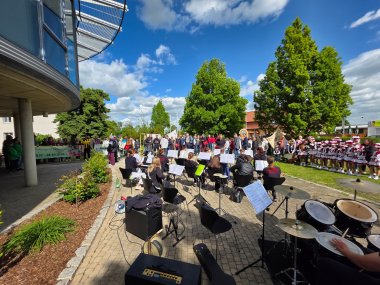
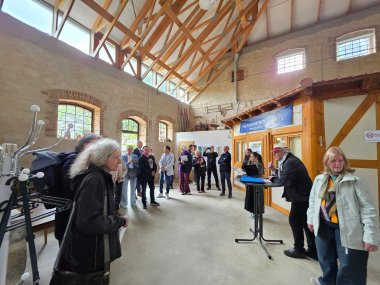
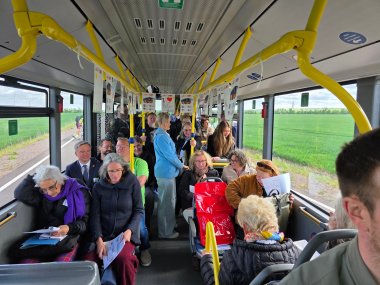
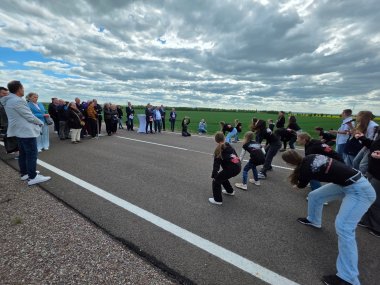
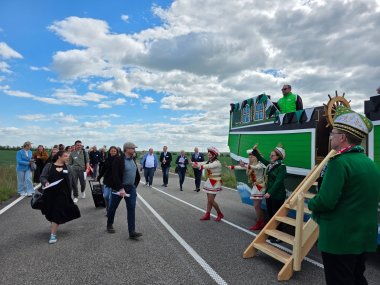
After the welcome and the first stop at the district hall in Ermslebener Straße, the presentation involved boarding the culture bus, which - as was the idea behind the project - took people to the cultural centre. Next stop Westdorf and the "Alter Pferdestall" meeting place. Artists were waiting there with samples from the writing workshop and the art of drawing. The short information tour continued along the future bypass and connecting road to stops with the four mayors, to the Kulturbus project idea, with performances by schoolchildren, dancers, singers, live music and a loud, colourful hello from the carnivalists. They offered guests an exclusive view of the growing maize maze at the roundabout from their ship of fools. Back at the Kreishaus, big band sounds and the clubs welcomed the entourage around the jury for a chat, if only in a kind of speed dating.
The new cultural network has presented itself impressively. At least that's what the jury confirmed at the beginning of the small group discussion with the project partners at the end. After the statements and a few questions about the concept presented, jury head Völckers only went so far as to say that she was "totally impressed" and "hopes that good decisions will be made". These decisions should be made in mid-June.
Since last year - during the development phase of the Aller.Land project - three future workshops have been organised as a new instrument. Right from the start, there was a great deal of interest and resonance from the associations addressed and also from the population. The formulated project ideas are intended to familiarise people with the project, encourage participation and strengthen and consolidate structures. They are the content of the "Wir4Gemeinsam" concept in the funding competition: The creation of a cultural centre for the region, such as the example of the corn maze that is currently growing; the revitalisation of meeting places with more events, including in churches, and workshops with artists; a separate small project fund to provide financial support for associations; the expansion of the Aschersleben Sustainability Week for all schools in the region; a rotating cultural bus as an answer to the mobility problem in rural areas and, last but not least, a sustainable network structure with an annual symposium for cultural workers and associations and with central contact persons in the project office as well as a new cultural manager at the town of Aschersleben. The Salzland district intends to take over the financial processing with the federal government.